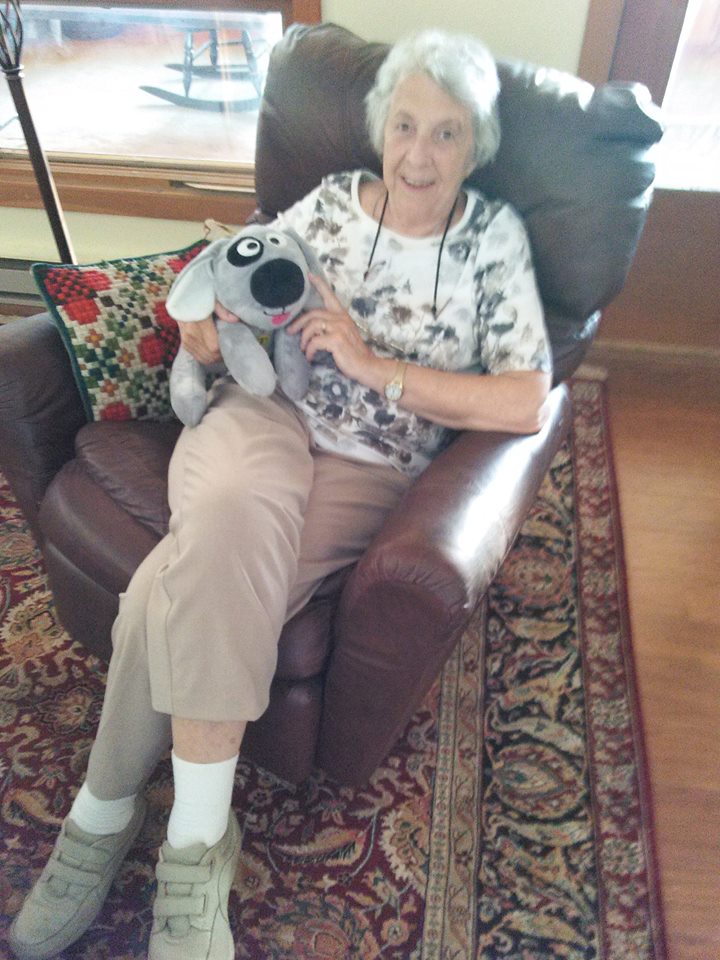


THE MAGIC OF TROUBLE THE DOG® can bring comfort to people of all ages. Whether for a child facing a challenge or an elderly adult seeking companionship, Trouble is there to help—one hug at a time.
More Than “Just a Toy”. When we think of stuffed animals, the picture that likely springs to mind for most of us is that of a child's bedroom filled with plush companions or a favorite teddy bear tucked under a little one's arm at bedtime. But what if that these soft, comforting friends aren't just for kids? In fact, stuffed animals—like Trouble the Dog—can be a source of profound comfort and companionship for elderly adults, too.
For seniors navigating the challenges of aging—loneliness, anxiety, or even cognitive decline—a simple plush companion can be a lifeline. Trouble the Dog, originally created to help children cope with tough emotions, has found a special place in the hearts of older adults as well. With his soft fur, expressive face, and gentle presence, Trouble is a comforting friend who's there when you need him most.
Here are five ways a plush companion like Trouble the Dog can make a difference for an older adult, and some practical ways caregivers and families use him.
Aging is a journey filled with both wisdom and challenges. For many seniors, the later years can bring profound losses—the passing of loved ones, the gradual decline of physical independence, and the quiet ache of loneliness that can settle in when social circles shrink. These emotions, often unspoken, can feel overwhelming, leaving many elderly adults searching for comfort and stability in a world that seems to be changing too quickly.
But sometimes, the simplest solutions can have the most profound impact. Enter the humble stuffed animal—a soft, unassuming companion that can provide a sense of safety, warmth, and connection when it's needed most. For seniors navigating the complexities of aging, a plush friend like Trouble the Dog can be a lifeline, offering a tangible source of comfort that's always within reach.
How Trouble the Dog Helps. Trouble the Dog is a plush companion designed with comfort in mind. His soft fur, gentle expression, and huggable size make him the perfect friend for seniors who are dealing with anxiety, grief, or loneliness. Holding Trouble and stroking his fur can activate the body's relaxation response, helping to ease stress and bring a sense of calm.
For seniors who may feel isolated or disconnected, Trouble offers a sense of presence. He's there to listen without judgment, to provide comfort without demands, and to remind them that they're not alone. Whether it's a quiet moment of reflection or a gentle hug during a difficult day, Trouble's comforting presence can make all the difference.
Real-Life Applications:
For many seniors, a lifetime of caring for others—whether raising children, tending to pets, or supporting a partner—has shaped their identity. The act of nurturing is deeply ingrained, a source of joy and purpose that gives life meaning. But as they age, opportunities to care for others often diminish. Children grow up and move away, pets may no longer be practical, and the loss of a spouse can leave a void that's hard to fill. This shift can leave seniors feeling adrift, longing for a way to express their innate desire to nurture and connect.
This is where a simple, yet profound solution comes in: stuffed animals like Trouble the Dog. These soft, comforting companions can help fill the gap, offering seniors a way to channel their nurturing instincts and rediscover a sense of purpose.
For those with dementia in particular, the feel of holding or stroking something soft can call up memories of children, pets, or people they loved, and open a way back to happier times.
How Trouble the Dog Helps. Trouble the Dog is a friend with his own story. Originally designed to bring comfort to children facing tough emotions, Trouble has a gentle, approachable presence that resonates with seniors, too. He's soft to the touch, with an expressive face that seems to say, “I'm here for you.”
For seniors, Trouble can become a cherished friend. They can talk to him, “care” for him by keeping him close, or even create little routines around him—like brushing his fur or positioning him just so on a favorite chair. These small acts of nurturing can provide a sense of structure and purpose, helping seniors feel needed and valued.
Real-Life Applications:
Loneliness and social isolation are among the most significant challenges faced by elderly adults. As social circles shrink and mobility becomes limited, many seniors find themselves spending long hours alone, longing for connection but unsure how to bridge the gap. For those who are shy, withdrawn, or struggling with communication, reaching out can feel daunting. But sometimes, all it takes is a simple, non-threatening presence to spark a conversation and create a sense of belonging.
Enter the humble stuffed animal—a soft, approachable companion that can serve as a bridge to social interaction. Whether it's through group activities, shared stories, or simply the comfort of a familiar presence, plush companions like Trouble the Dog can help seniors feel more connected to others and to the world around them.
How Trouble the Dog Helps. Trouble the Dog is a conversation starter with a story. Originally designed to help children navigate tough emotions, Trouble's backstory resonates with people of all ages. His gentle expression and comforting presence make him a natural focal point for discussions about care, resilience, and the importance of emotional support.
For seniors, Trouble can serve as a bridge to connection. Whether it's reminiscing about a favorite childhood toy, sharing stories about pets they've loved, or simply admiring Trouble's soft fur, he provides a safe and familiar topic that encourages interaction. And for seniors who receive Trouble as a gift from family members, he can serve as a tangible reminder of love and connection, even when loved ones are far away.
Real-Life Applications:
Caring for someone with dementia or Alzheimer's disease can be both deeply rewarding and profoundly challenging. One of the most difficult aspects of dementia care is managing agitation and restlessness, which are common symptoms as the disease progresses. These behaviors—ranging from pacing and fidgeting to verbal outbursts—can be distressing for both the individual and their caregivers. Finding ways to soothe and comfort becomes a top priority, and sometimes, the simplest solutions are the most effective.
Stuffed animals, with their soft textures and comforting presence, have been shown to provide a sense of calm and stability for dementia patients. Unlike high-tech interventions, which can sometimes feel overwhelming or confusing, a plush companion like Trouble the Dog offers a gentle, low-tech solution that meets patients where they are.
How Trouble the Dog Helps. Trouble the Dog is uniquely suited to provide comfort to dementia patients. Unlike robotic therapy pets, which can be expensive and require maintenance, Trouble is a simple, low-tech solution that doesn't overwhelm the senses. His soft fur is soothing to touch, and his friendly, expressive face can evoke feelings of warmth and familiarity.
For dementia patients, Trouble can serve as a calming presence during moments of confusion or distress. Holding him close or stroking his fur can help redirect attention, easing agitation and promoting relaxation. And because Trouble is lightweight and portable, he can be easily incorporated into daily routines, providing comfort wherever it's needed.
Real-Life Applications:
In a world that often feels demanding and fast-paced, there's something profoundly comforting about a presence that asks for nothing in return. For many seniors, especially those who live alone or have limited contact with family and friends, loneliness can become a constant companion. Human interactions, while meaningful, can sometimes come with expectations, misunderstandings, or emotional complexities. This is where the simple, unconditional companionship of a stuffed animal can make all the difference.
Stuffed animals like Trouble the Dog offer a unique kind of comfort—one that's free from judgment, demands, or complications. They're always there, ready to listen, to be held, or simply to sit quietly by your side. For seniors navigating the challenges of aging, this kind of companionship can be a lifeline, providing emotional security and a sense of connection when it's needed most.
How Trouble the Dog Helps. Trouble the Dog is more than a stuffed animal—he's a silent, steadfast friend. Designed to absorb worries and provide comfort, Trouble doesn't talk back, judge, or impose any demands. He's simply there, offering a soft presence that seniors can turn to whenever they need support.
For seniors who may feel hesitant to share their feelings with others, Trouble can serve as a safe outlet for emotional expression. Talking to Trouble, holding him close, or simply keeping him nearby can provide a sense of relief and connection. And because Trouble is always there, he becomes a reliable source of comfort, day or night.
Real-Life Applications:
Stuffed animals like Trouble the Dog are far more than just toys—they're silent companions, emotional anchors, and sources of comfort that transcend age. For elderly adults, especially those navigating the challenges of aging, loneliness, or cognitive decline, Trouble offers something truly special: a gentle, unwavering presence that soothes the soul and brings light to even the darkest days.
From reducing anxiety and agitation to fostering social connections and reigniting a sense of purpose, families and caregivers tell us Trouble earns his place. Whether it's through the simple act of holding him close, sharing a quiet moment, or finding comfort in his familiar presence, Trouble has a unique way of making life feel a little softer, a little warmer, and a little more connected.
If you have a parent, grandparent, or elderly loved one who could use a little extra comfort, consider introducing them to Trouble the Dog. In a world that often feels overwhelming and fast-paced, Trouble reminds us that sometimes, the simplest solutions—like a soft, loyal companion—make the biggest difference.
Whether for a child facing a challenge or an elderly adult seeking companionship, Trouble is there to help—one hug at a time.
Give a parent, grandparent, or elderly loved one a soft, loyal companion who is always within reach.
Buy Now